Budgets that start with industry intelligence end with activations that keep costs down and profits up.
01
With BX/D, your budgets are instantly built by leveraging real-time industry data and vendor pricing.
02
BudgetBASE IQ surfaces gaps and potential issues, before the build begins. Saving 23-40% on average.
03
Edit, collaborate, and share as you go; the budget adjusts to location-specific data and flags along the way.
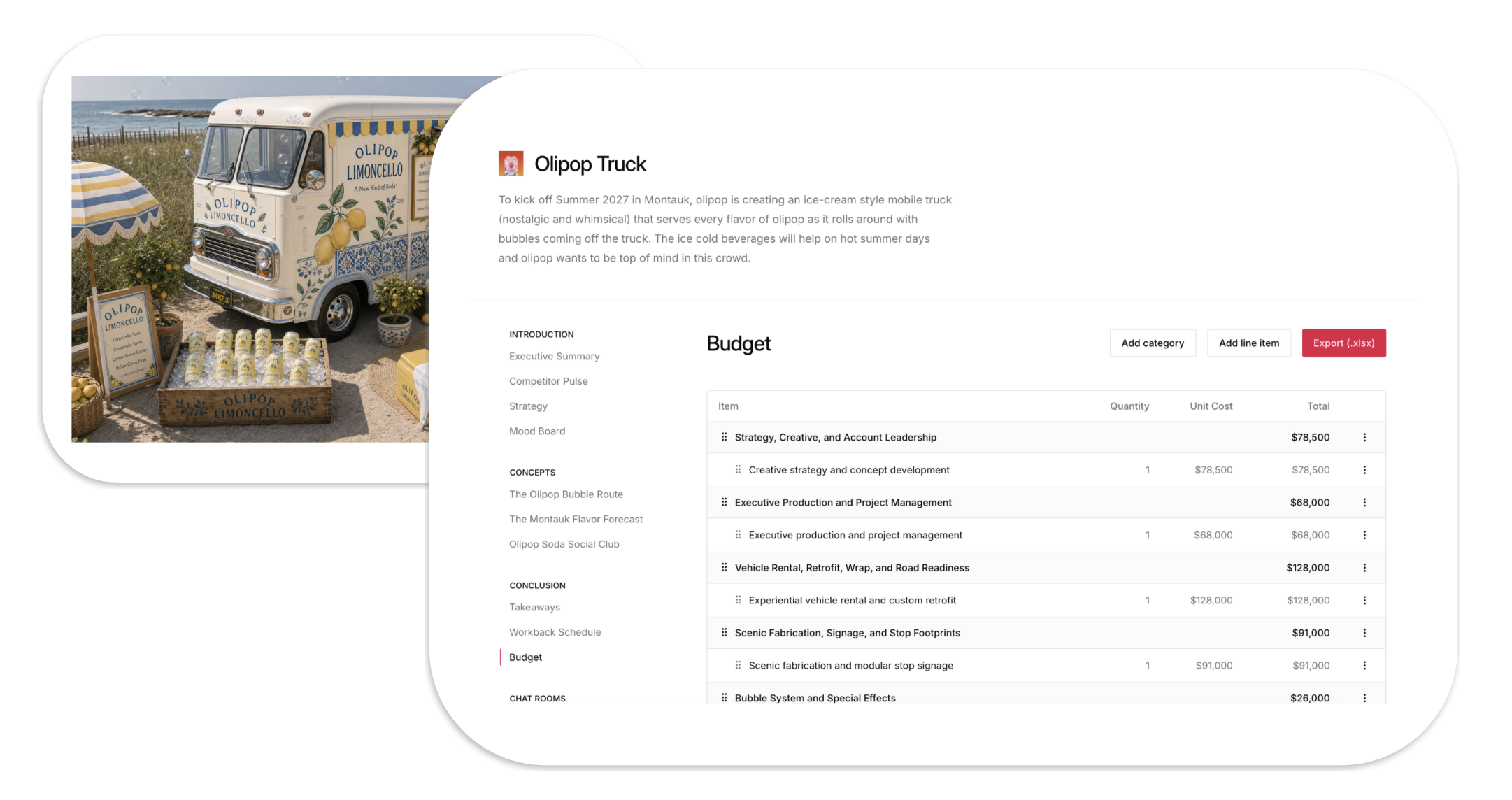
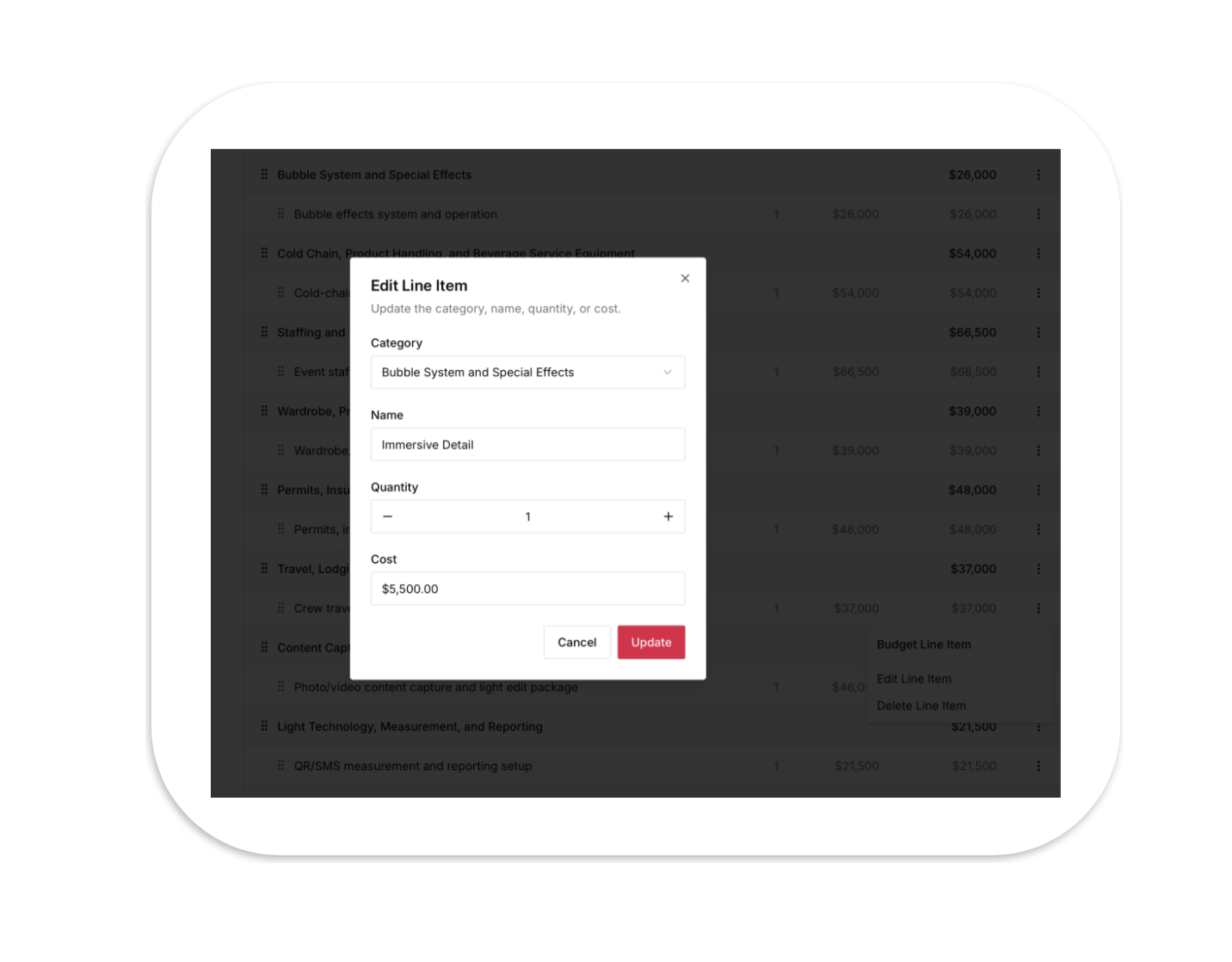
Stop discovering budget mistakes in the middle of production.
Financial intelligence that used to live only in the heads and spreadsheets of the most experienced producers in the room.
-
Every line of your budget is benchmarked against actual production costs from five years of real activation outcomes across the OOO network — real vendor rates, real talent costs, real production benchmarks from programs that actually ran. Not estimates. Not published ranges. What things actually cost.
-
The average shortfall between a brief-stage budget estimate and the final contracted production cost for an activation without production intelligence is 23 to 40 percent. For a $500,000 program that is up to $200,000 in variance that surfaces mid-production — when the options for managing it have already narrowed and the client conversation nobody wanted is now unavoidable. BudgetBASE IQ surfaces every material gap before a single vendor conversation begins. Where a budget line does not match production reality, the platform flags it — with the specific context that generated the flag, the category where the gap is largest, and the recommended resolution. Not just a problem. A path forward. Before the problem costs anything.
-
Every market has its own vendor landscape, its own labor rates, its own permitting requirements, its own logistical cost variables, and its own production conditions that a budget built on assumptions from a different city will never account for. BudgetBASE IQ applies location-specific intelligence to every line of your budget — adjusting for market rate differentials, local vendor pricing, regional labor costs, and the logistical variables specific to the geography your activation is entering. The budget your team brings to vendor contracting already knows what things cost in that city. Not approximately. Specifically.
-
Most activation budgets are built from memory and habit — the same line items carried forward from the last program, adjusted by gut feel, with categories added or removed based on whoever is in the room when the spreadsheet is opened. BudgetBASE IQ builds your budget from the brief up — reading your activation scope, your format, your market, and your production requirements to surface the categories your program actually needs, in the proportions the market actually supports. Nothing important left off the line. Nothing included that the scope does not require. Every category informed by what comparable programs at comparable scale actually allocated — so the budget reflects the build rather than the habit.
-
BudgetBASE IQ is not a standalone spreadsheet tool. It is connected to your BX/D brief from the moment your project opens — which means every budget decision is informed by the audience profile, the cultural timing, the market conditions, the production scope, and the strategic objectives your brief has already established. A budget that knows why it exists makes better decisions than one that does not. When your brief changes, your budget updates. When your scope adjusts, your benchmarks adjust with it. The brief and the budget are the same document — because the decisions that drive one drive the other.
-
A budget approved at the brief stage is not a static document. Scope changes. Vendors negotiate. Timelines compress. Line items shift. BudgetBASE IQ tracks your budget against actual commitments and contracted costs as the project builds — giving your team a real-time view of budget health from brief to build rather than a post-mortem accounting of what was spent after the activation closes. Every variance is visible before it compounds. Every reallocation is made from a position of full information rather than partial visibility. The budget you approved at the start of the project and the budget that produced the activation are the same number — because the platform was watching the gap the entire time.